5 Suggestions for TED Like Presentations
 Since the very first day I started working in the training & development field, one of the most requested training topics is “Effective Presentation Skills.” The most important reason of this is that speaking in front of an audience is a common fear of us. We all want to be liked but in the mean time ask ourselves the question: What if I am not?
In the recent years the threshold of a good presentation has risen. The typical suggestions like;
*use bullet points instead of plain text and have maximum 6 lines per slide,
*do not use cliparts but good visuals and photographs,
*have eye contact with the audience and do not fold your arms while talking etc… are not sufficing our needs any more.
 Online platforms and social media are effective tools for promotions in marketing as well as for hiring in human resources. When you take into account the development of learning technologies and the learning habits of Y generation, these platforms also represent an essential opportunity for learning activities. Before further details and examples of the use of social media in learning, I would like to explain “Social Learning” concept briefly.

 Considering the training programs in corporate life, one of the most popular topics is entitled “Creative Thinking”. In today’s environment our life styles and socioeconomic conditions are changing rapidly. Additionally expectations of customers are continuously increasing. In order to meet these expectations; every firm, every department and every employee need to think and act in more creative ways. This situation has led to an increase in demand for “Creative Thinking” courses.
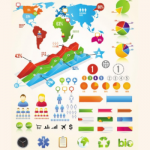 Brain is capable of absorbing 36,000 images every minute and almost 90% of the information absorbed by the brain comes through the eyes. Stemming from these facts, today visual information such as pictures, drawings or dynamic videos is often designed to facilitate learning and instruction. These visuals improve cognition by utilizing information, enhance the effectiveness of the learning process and make it easier for the users to remember the details of the subject.
 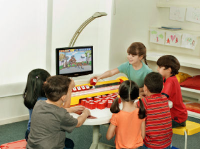 Augmented Reality (AR) is an enhanced version of reality created by the use of technology to overlay digital information on an image of something being viewed through a device like a smartphone or a camera. An AR system generates a composite view for the user that is the combination of the real scene viewed by the user and a virtual scene generated by the computer that augments the scene with additional information. The goal of Augmented Reality is to create a system in which the user cannot tell the difference between the real world and the virtual augmentation of it.
Serife Arici • 18 October 2018
My suggestion may be; choosing commonly used words as if it is not a speech but a conversation between you and the audience. If the words we use are too terminological, it may be hard to follow for the others.